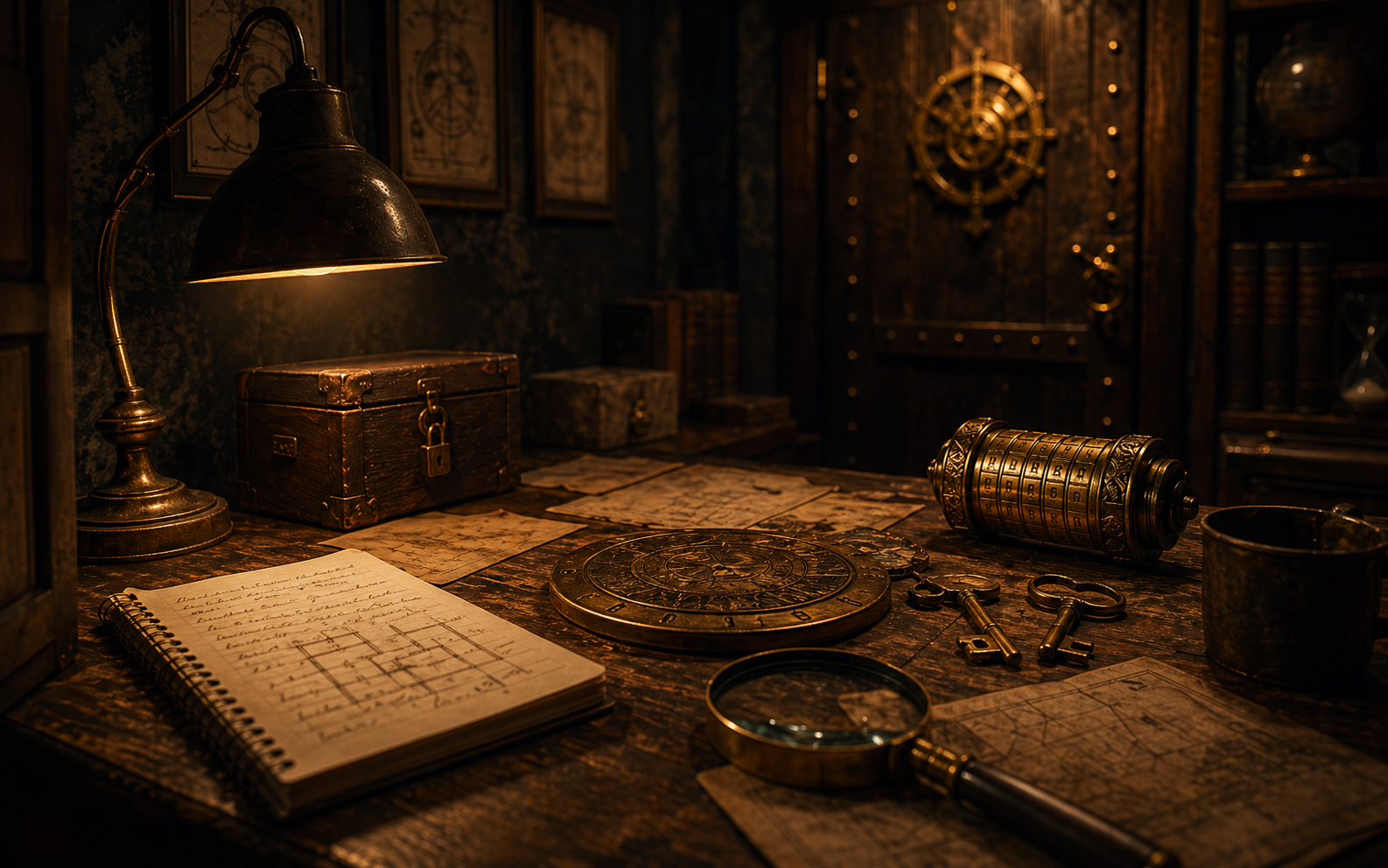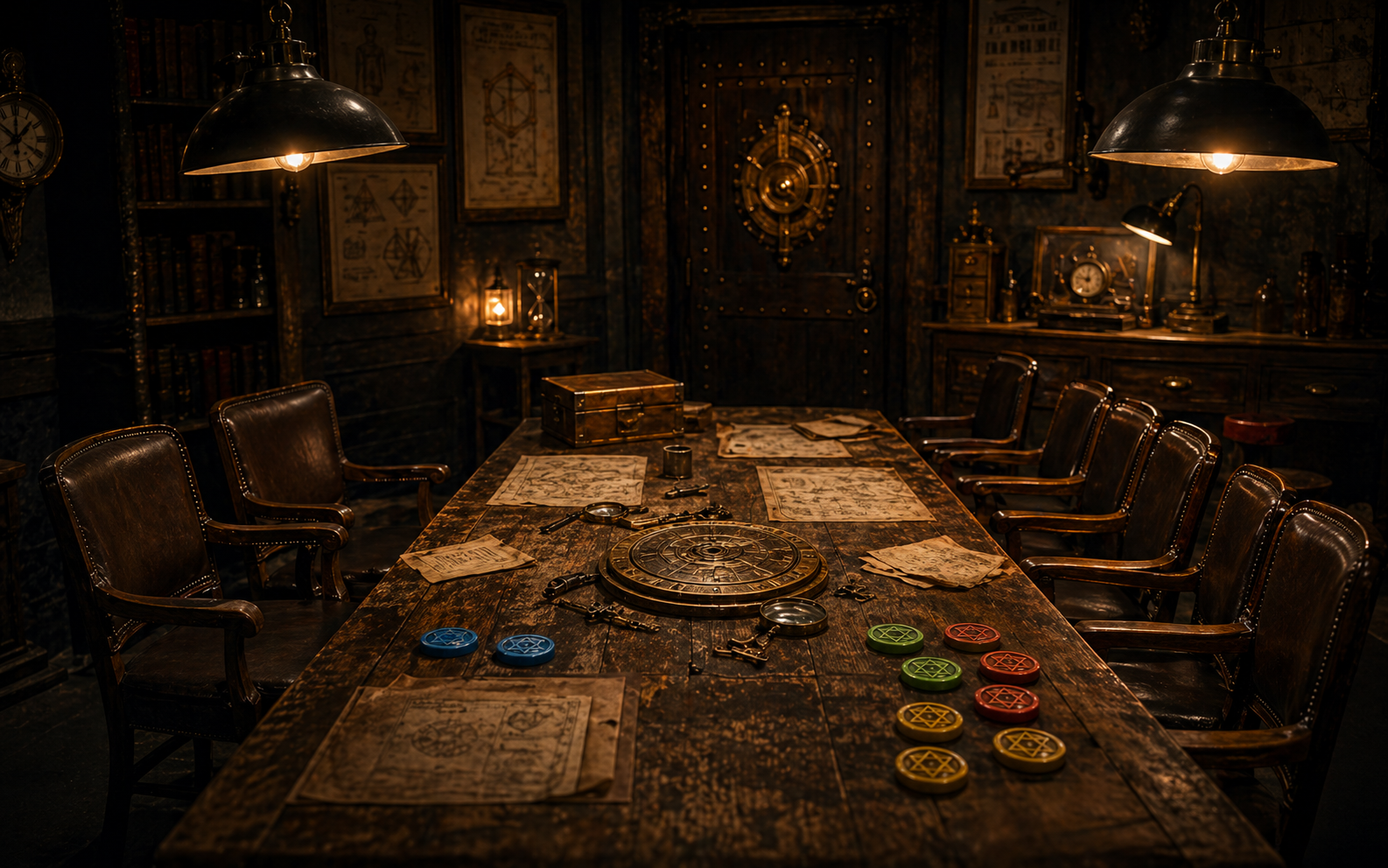
Team size changes the whole texture of an escape room. The same game can feel intimate with two players, balanced with four, and noisy with six. The trick is not choosing the biggest team allowed; it is choosing the team size that gives everyone enough to do.
Two players
A pair gets focus, atmosphere, and a strong shared memory. It also gets the full workload. Choose two-player runs when both people are comfortable searching, communicating, and pushing through stuck moments without a larger group to absorb the pressure.
 The Clockmaker Locked Room London · London View room
 Three or four players
Three or four is the safest default for many rooms. There is enough coverage for parallel searching and enough conversation to avoid tunnel vision, but the room rarely becomes crowded. If you do not know the venue well, this is usually the cleanest place to start.
The maximum player count is a capacity limit, not a recommendation.
Five or six players
Larger teams bring energy, jokes, and resilience, but they also create dead time if the room is linear or physically tight. Look for rooms with multiple puzzle threads, larger sets, actor interaction, or explicit operator guidance that says the game works well at the top of its range.
Warning signs
Be careful when a room has a high maximum player count but very little evidence of scale. A small set, one central puzzle chain, or a theme built around observation rather than exploration can leave half the group watching. In those cases, a smaller team may make the room feel better.