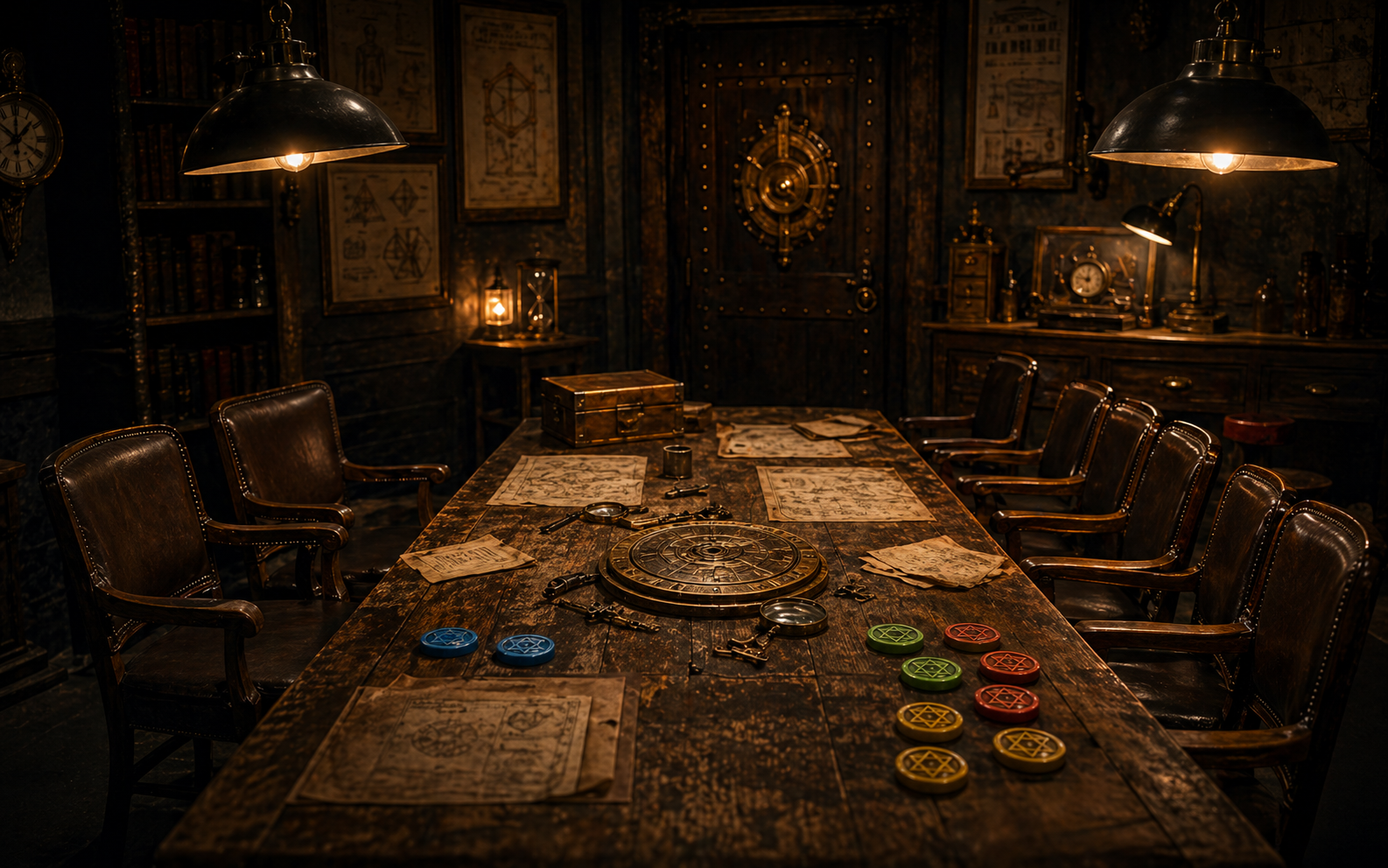
Difficulty labels are useful, but only when you know what they are measuring.
Start with the source
Difficulty is most useful when it comes from the operator rather than a guess from runtime, theme, or review sentiment. Operators know whether a game is built for first-timers, enthusiasts, or teams that enjoy a harder solve path.
 The Clockmaker Locked Room London · London View room
 Difficulty means different things
One room may be difficult because the puzzles are abstract. Another may be difficult because the space is busy, dark, physical, or actor-led. Treat the label as a signal, then read the supporting facts before deciding whether that kind of difficulty suits your group.
Match confidence, not ego
The best difficulty choice is the one that keeps the group engaged. Easy can still be delightful. Expert can still be frustrating for the wrong team. If you are mixing first-timers and regular players, a moderate room with strong flow often beats a harder room with uneven participation.