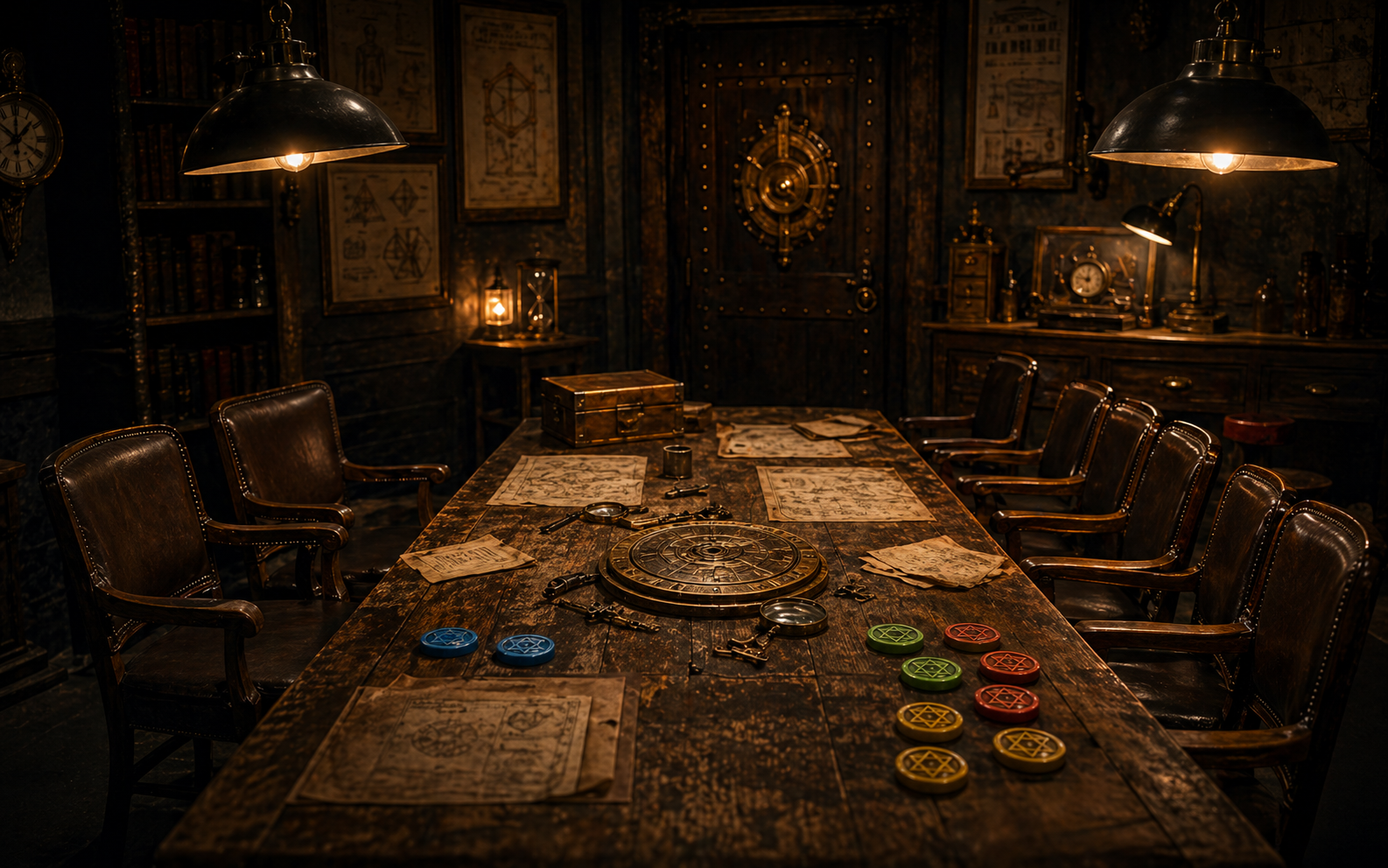
The right escape room is rarely the one with the loudest theme or the highest difficulty claim. It is the one that fits the people in the room, the mood of the night, and the amount of pressure your group will actually enjoy.
Start with the group
First-timers, mixed-confidence teams, and experienced players need different kinds of pressure. Before looking at theme, decide whether your group wants guidance, competition, performance, atmosphere, or a puzzle-heavy challenge. A room can be excellent and still wrong for the people you are taking.
 The Clockmaker Locked Room London · London View room
 Match mood before difficulty
Difficulty is useful, but mood is usually the better first filter. Ask whether the night should feel funny, cinematic, eerie, clever, physical, or collaborative. Once the emotional shape is right, difficulty becomes a fine-tuning choice rather than the whole decision.
The best escape room is not the hardest. It is the one your group will actually enjoy.
Check the practical fit
Use team size, runtime, location, and operator guidance as the reality check. A brilliant room that only works for six people is not the right answer for a pair. A tense actor-led experience is not the right answer for someone who wants a calm puzzle box. Practical fit protects the night.
Build a shortlist, not a spreadsheet
Pick two or three rooms that genuinely fit, then compare the tradeoffs. The point is not to optimize every possible variable. It is to avoid obvious mismatches and choose a room your group can commit to with confidence.