Chelmsford, UK Players2-8 Duration60 min Avg escape49 min DifficultyModerate
The Last Testament
Chelmsford Escape Rooms
A dusty will-reading mystery set in a deserted house, with low scares and a clear old-fashioned eerie mood. It leans on atmosphere and narrative more than dense puzzle work, so it is best judged on whether you want a moody, characterful room rather than a hard-edged challenge.
The Story
Secrets Behind the Dust
The Last Testament leans into a properly old-fashioned inheritance mystery, with the power off, the house deserted and the will reading hanging over everything. It is mildly eerie rather than frightening, and that suits the material well. This is a room for teams who like story first, atmosphere second and a sense of inherited secrets slowly coming to light.
What gives it real pull is the setting. The deserted-house premise, dust, darkness and domestic detail create a clear mood, and the room seems to use those ingredients with confidence. As one player put it, “The story and set really carry it,” which is exactly the right lens for this game. If you want spectacle through theme rather than through high-concept mechanics, this is where it earns attention.
Puzzle-wise, expect moderate difficulty rather than a dense grind. Observation, deduction and clue linking do most of the work, with the occasional maths-tinged step and some moments that may feel a little out of sequence. That means the room rewards good communication and a team that stays flexible when the flow is not perfectly neat.
The experience also sounds a touch theatrical, with video or audio-led storytelling and game-master involvement shaping parts of the run. That can add personality, but it may not suit players who prefer a clean, hands-off puzzle box. There are signs that some groups found the performance side awkward, so this is best approached if you are open to a guided, story-led style.
For families, mixed groups and newer players, it should be broadly accessible, especially with the low scare level and 8+ guidance. The caveat is simple: if you travel for tightly signposted puzzles and a heavy puzzle count, this may feel lighter than you hope. If you want mood, a distinctive premise and a room that remembers its narrative, The Last Testament is worth your time.
How It Compares
The Last Testament sits closer to an atmospheric story room than a dense puzzle box. Its strongest qualities are mood, set dressing and a clear domestic mystery frame, while the puzzle load and flow appear more modest than enthusiasts will expect from a standout challenge.
Puzzle Focus
Moderate
Immersion
Strong
Technology
Low
Scare Factor
Very Low
Physicality
Low
Uniqueness
Moderate
What To Expect
Will reading
You step into a deserted family house and the premise quickly settles into a curious inheritance mystery.
Dusty setting
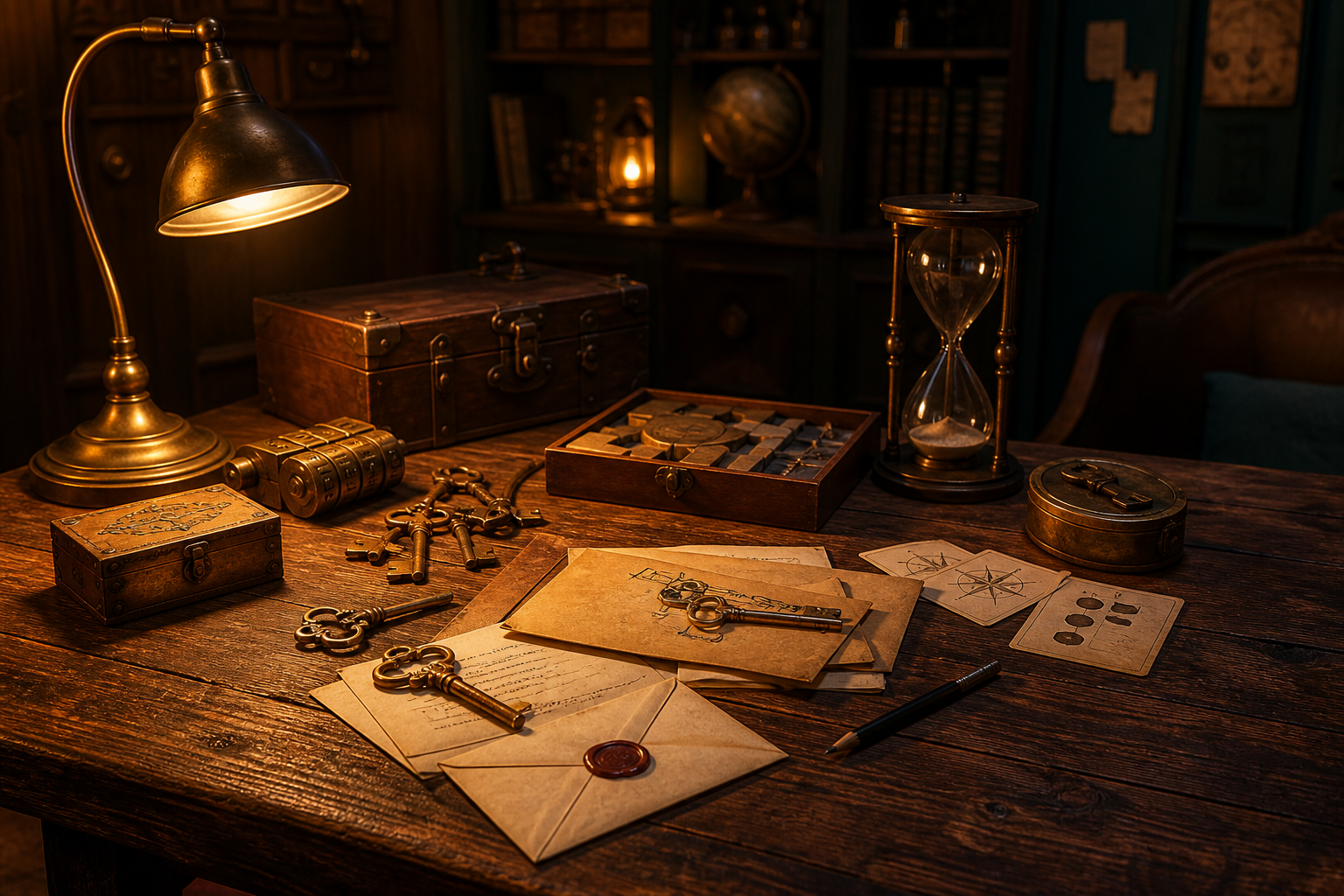
The room uses darkness, dust and a shut-up-house feel to build a contained, gloomy atmosphere.
Story first
Expect the narrative to drive the experience, with the room favouring mood and progression over relentless puzzle count.
Moderate puzzling
The challenge looks balanced, mixing observation and deduction with a few moments that may feel uneven.
What Players Are Saying
Players repeatedly highlight the set, calling it strong and memorable long after leaving.
Strong setThe theme earns praise for feeling distinctive, with a clear sense of place throughout.
Imaginative atmosphereSome players felt the experience became tangled, with moments that felt redundant or out of step.
Flow issuesReady To Play?
Book your mission.
Spots can change quickly. Gather your team, compare options, then choose the room that best fits the night.
Continue comparing
Same company
All by Chelmsford More from Chelmsford

Chelmsford
All in Chelmsford